TMS Treatment Process: From Initial Evaluation to Completion of Therapy Sessions
Transcranial Magnetic Stimulation (TMS) is a modern, non‑invasive treatment used in psychiatry for several mental health conditions, most notably treatment‑resistant depression. In this technique, controlled magnetic pulses are delivered to specific regions of the brain in order to modulate the activity of neural networks involved in mood regulation and emotional processing.
If you would like to learn more about the scientific basis of this technique, you can read our article “What Is Transcranial Magnetic Stimulation (TMS)?” on the Mavaranegar website.
Many people who first hear about TMS therapy wonder how the treatment is performed and what the overall process looks like. Understanding the treatment steps can help patients approach the therapy with greater clarity and reduced anxiety.
In general, TMS treatment follows a structured, step‑by‑step process that includes three main stages:
- Clinical evaluation and eligibility assessment
- A series of scheduled TMS treatment sessions
- Follow‑up and evaluation of treatment outcomes
Familiarity with these stages allows patients to better understand the treatment pathway and develop realistic expectations about the process.
1. Initial Evaluation Before Starting TMS Therapy
The first step in Transcranial Magnetic Stimulation treatment is a comprehensive clinical evaluation. During this stage, the physician determines whether TMS is an appropriate and safe treatment option for the patient.
During the assessment session, several factors are typically reviewed, including:
- The type and severity of depressive or other psychiatric symptoms
- Duration of the illness
- Previous treatments, such as pharmacotherapy or psychotherapy
- The patient’s response to earlier treatments
- Current medications
- History of neurological disorders or seizures
- Presence of metallic implants or certain medical devices in the body
In many cases, TMS therapy is recommended for individuals who have not responded adequately to conventional treatments, such as antidepressant medications, or for those who experience significant medication side effects.
Identification of the Target Brain Region
After the evaluation, the physician determines the specific brain region that will be stimulated during treatment. In most clinical protocols, the target area is part of the prefrontal cortex, a region of the brain that plays a key role in mood regulation, emotional processing, and executive functioning.
The stimulation intensity is also individually calibrated for each patient to ensure that the treatment parameters are aligned with the patient’s neurophysiological characteristics.
2. How Are TMS Treatment Sessions Performed?
Once the evaluation process is completed, the treatment sessions begin. One of the major advantages of TMS therapy is that it is a non‑invasive procedure that does not require anesthesia or hospitalization.
Beginning the Treatment Session
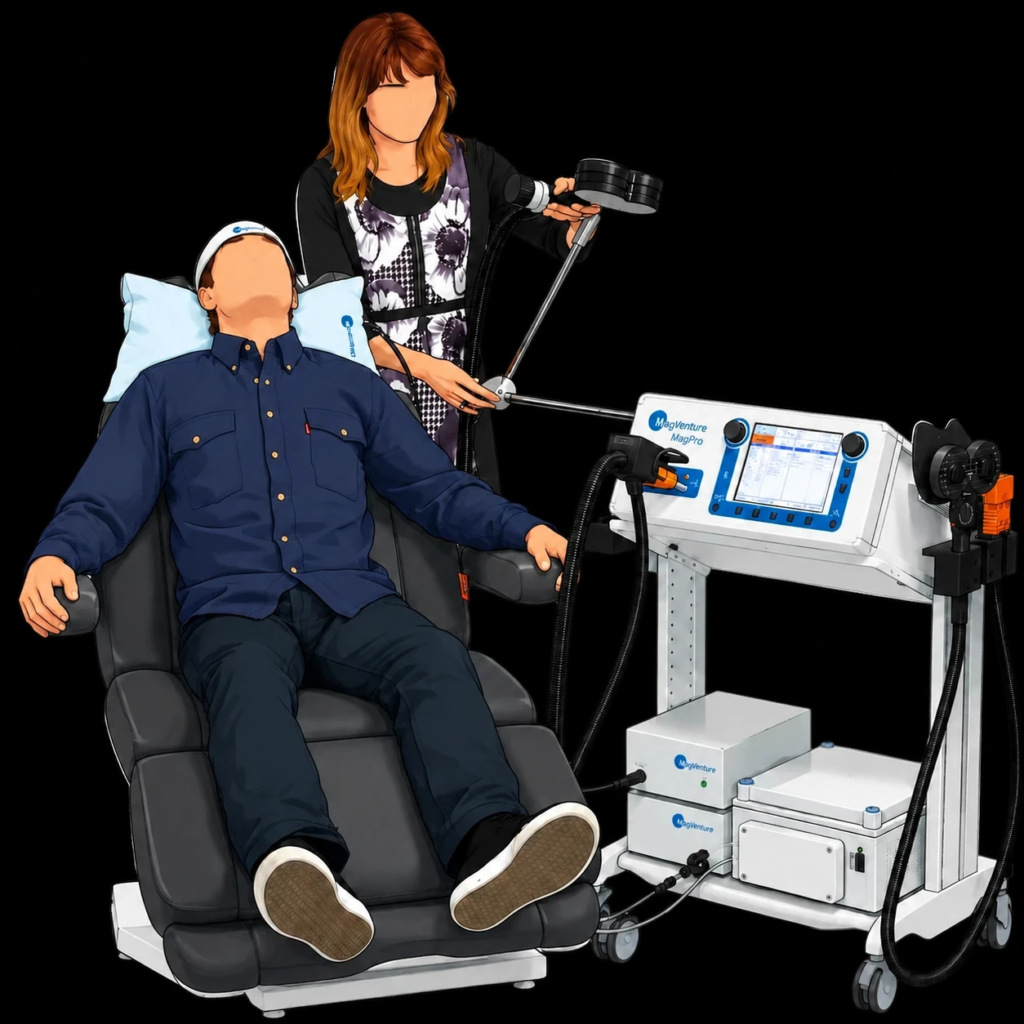
When the patient arrives at the treatment center, they sit comfortably in a specialized chair designed to support the head and maintain proper positioning. A trained clinician or technician then places a magnetic coil on the patient’s scalp over the previously identified target area.
This coil generates brief, controlled magnetic pulses that pass through the skull and stimulate neurons in the targeted brain region.
What Does the Patient Experience During the Session?
Throughout the session, the patient remains fully awake and alert. The device typically produces a clicking sound, and patients may feel a tapping or mild knocking sensation on the scalp.
Most individuals find these sensations tolerable, and many report that they become accustomed to them after several sessions.
Duration and Number of Sessions
The duration and number of sessions may vary depending on the specific treatment protocol used. However, in many standard clinical programs:
- Each session lasts approximately 20 to 40 minutes
- Sessions are usually conducted five days per week
- A typical treatment course lasts four to six weeks
Some centers may also implement accelerated or alternative protocols depending on clinical needs.
What Happens After the Session?
One of the important advantages of Transcranial Magnetic Stimulation is that patients can typically resume their normal daily activities immediately after a session. Unlike treatments that involve anesthesia, TMS generally does not require a recovery period.
3. Follow‑Up and Evaluation of Treatment Outcomes
After the completion of the treatment course, an important stage known as clinical follow‑up begins. During this phase, the physician evaluates how well the patient has responded to the therapy.
Monitoring Symptom Improvement
During follow‑up assessments, clinicians often evaluate changes in symptoms such as:
- Reduction in depressive mood
- Decrease in anxiety levels
- Improvement in sleep quality
- Increased energy levels
- Improved concentration
- Better functioning in daily activities
Some patients begin to notice positive changes during the treatment course, while in others, improvements may become more noticeable several weeks after the sessions have been completed.
Maintenance Sessions
In certain cases, physicians may recommend maintenance TMS sessions to help sustain treatment benefits and reduce the likelihood of symptom relapse. These sessions are usually scheduled less frequently than the initial treatment series.
Benefits of TMS Therapy
Because of its clinical characteristics, Transcranial Magnetic Stimulation has become an important therapeutic option for many patients. Some of the key advantages of this treatment include:
- It is non‑invasive
- It does not require anesthesia
- There is no recovery or downtime
- Patients can quickly return to their normal daily activities
- The treatment is generally well tolerated by many patients
- It may be an effective option for individuals with treatment‑resistant depression
However, the decision to pursue TMS therapy should always be made in consultation with a qualified medical professional.
Possible Side Effects of TMS Treatment
Compared with many other psychiatric interventions, TMS side effects are typically mild and temporary. Some individuals may experience:
- Mild headaches
- Scalp discomfort at the stimulation site
- Mild facial muscle twitching during stimulation
- A tapping sensation on the scalp during sessions
These effects are usually short‑lived and often decrease after the first few sessions.
Frequently Asked Questions About TMS Therapy
Is TMS treatment painful?
TMS is generally not considered painful. Most patients experience only mild tapping sensations on the scalp during stimulation.
How long does a TMS session take?
A typical session lasts between 20 and 40 minutes, depending on the treatment protocol.
How many TMS sessions are required?
Most treatment courses involve approximately 20 to 30 sessions over four to six weeks.
Can patients return to their normal activities after a TMS session?
Yes. One of the advantages of Transcranial Magnetic Stimulation (TMS) is that most patients can immediately return to their daily activities after a session. Because the procedure does not require anesthesia or sedation, patients are typically able to continue their normal routines, including work and social activities, on the same day.
Final Remarks
Transcranial Magnetic Stimulation represents a promising and increasingly utilized treatment option in modern psychiatry, particularly for individuals who have not achieved sufficient improvement with conventional therapies. The treatment process typically involves a structured pathway that begins with a careful clinical evaluation, continues with a series of non‑invasive stimulation sessions, and concludes with follow‑up assessments to evaluate therapeutic outcomes.
By understanding the stages of TMS treatment—from initial evaluation to the completion of therapy sessions—patients can approach the process with greater awareness and realistic expectations. As research in neuroscience and psychiatric treatment continues to advance, TMS is expected to play an increasingly important role in the management of mood disorders and other neuropsychiatric conditions.