Treatment-Resistant Depression: Heterogeneity of Depression and the Role of TMS in Symptom Improvement
One of the most common questions patients ask is:
“Why do I still feel depressed despite taking several antidepressant medications?”
Although many individuals with major depressive disorder improve with first-line treatments, a substantial proportion continue to experience persistent symptoms even after multiple pharmacological trials. In the scientific literature, this condition is referred to as Treatment-Resistant Depression (TRD).
The existence of treatment-resistant depression highlights a critical reality: depression is not a uniform or biologically identical disorder across individuals. Rather, it represents a heterogeneous spectrum of biological, psychological, and neurocircuit-based conditions.
Understanding this heterogeneity helps explain why a single therapeutic approach does not produce equivalent outcomes in all patients and why, in certain cases, more targeted interventions such as Transcranial Magnetic Stimulation (TMS) therapy for depression may be clinically indicated.
Depression Is Not a Single, Uniform Disorder
According to established psychiatric classification systems such as DSM-5 and ICD-11, Major Depressive Disorder (MDD) is defined as a specific diagnostic entity. However, both clinical experience and neurobiological research demonstrate that patients who meet criteria for the same diagnosis may present with markedly different symptom profiles.
For example:
- Some patients present with severe anhedonia, low energy, and psychomotor slowing.
- Others exhibit prominent anxiety, somatic tension, and persistent inner restlessness.
- Another subgroup primarily reports impaired concentration, reduced occupational performance, and a subjective sense of cognitive dullness or decreased mental clarity.
These clinical differences are not limited to symptom expression. Neuroimaging studies indicate that distinct brain circuits and functional networks may be differentially involved across patients with depression. Therefore, expecting a single treatment modality to be equally effective for all individuals is neither biologically nor clinically realistic.
Why Do Some Patients Not Respond to Standard Depression Treatments?
In a subset of patients, first-line treatments such as antidepressant medications or psychotherapy fail to produce sufficient clinical improvement. In such cases, the diagnosis of treatment-resistant depression may be considered.
Importantly, non-response to treatment is rarely attributable to a single factor. Instead, it typically reflects a complex interaction of biological, neurocircuitry, and clinical variables.
Biological Variability Between Individuals
Genetic makeup, receptor sensitivity, neurotransmitter dynamics, and drug metabolism vary significantly across individuals. These biological differences influence the degree to which a patient may demonstrate a favorable therapeutic response to a specific antidepressant medication.
Consequently, two patients with identical diagnostic labels may show markedly different responses to the same pharmacological intervention.
Differences in Brain Circuits
Neuroimaging research has consistently demonstrated that depression is associated with dysfunction in large-scale brain networks involved in:
- Mood regulation
- Threat processing
- Reward experience
- Cognitive control
For instance:
- Reduced activity within the reward circuitry may correlate with anhedonia and loss of motivation.
- Hyperactivity in threat-related networks may contribute to anxiety and chronic tension.
- Dysregulation within cognitive control networks may manifest as impaired concentration and reduced executive functioning.
Because conventional antidepressants primarily act on neurotransmitter systems, they may not directly or sufficiently modulate dysfunctional neural circuits in every patient.
Illness Severity and Course
The severity, duration, and recurrence of depressive episodes also influence treatment outcomes. Patients with chronic depression, multiple relapses, or prolonged untreated episodes are at greater risk of developing treatment-resistant depression and often require advanced or multimodal therapeutic strategies.
What Is Treatment-Resistant Depression?
Clinically, treatment-resistant depression is typically defined as the persistence of significant depressive symptoms despite at least two adequate trials of antidepressant medications, administered at appropriate dosages and duration.
It is essential to emphasize that treatment resistance does not imply that depression is untreatable. Rather, it indicates that alternative or more advanced therapeutic approaches may be required.
The Role of Transcranial Magnetic Stimulation (TMS) in Treating Depression
Transcranial Magnetic Stimulation (TMS) has emerged as a scientifically supported intervention for patients with treatment-resistant depression.
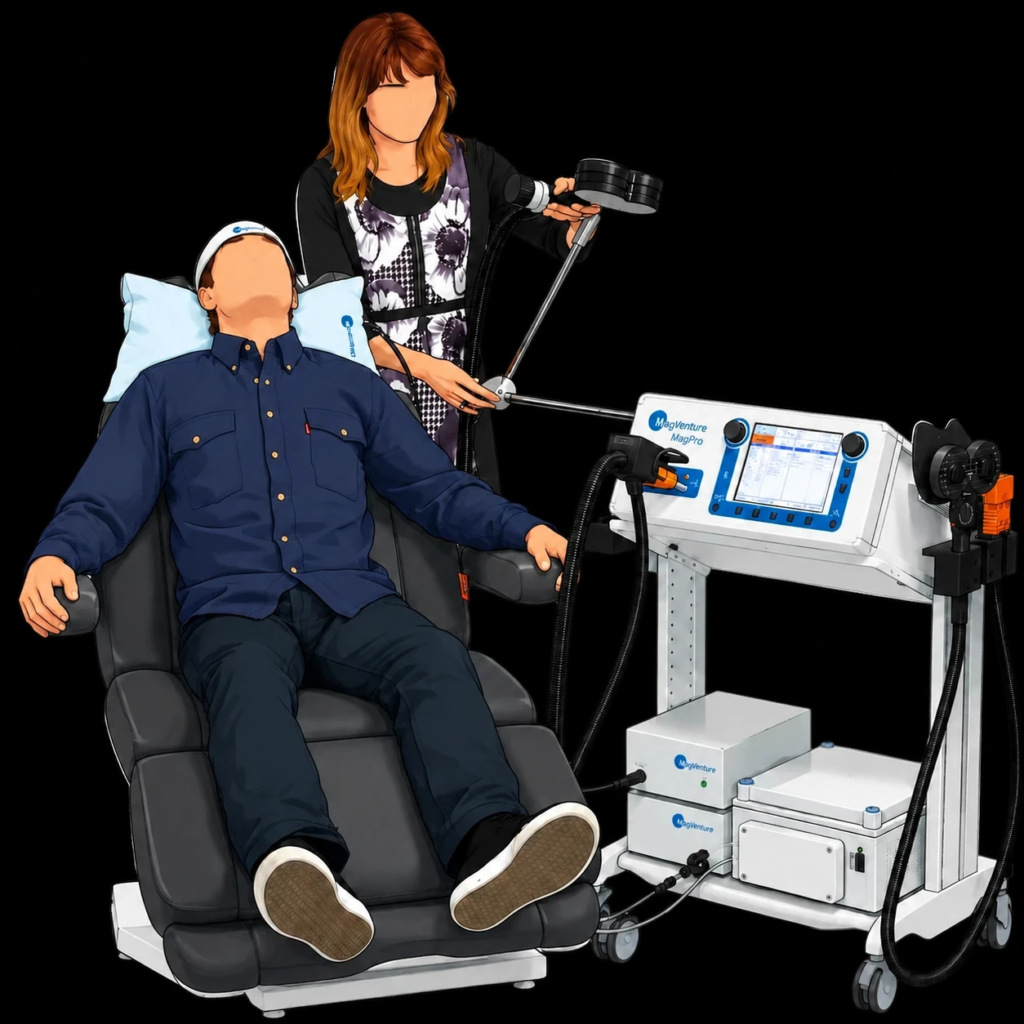
TMS is a non-invasive neuromodulation technique that uses magnetic fields to stimulate targeted cortical regions implicated in mood regulation.
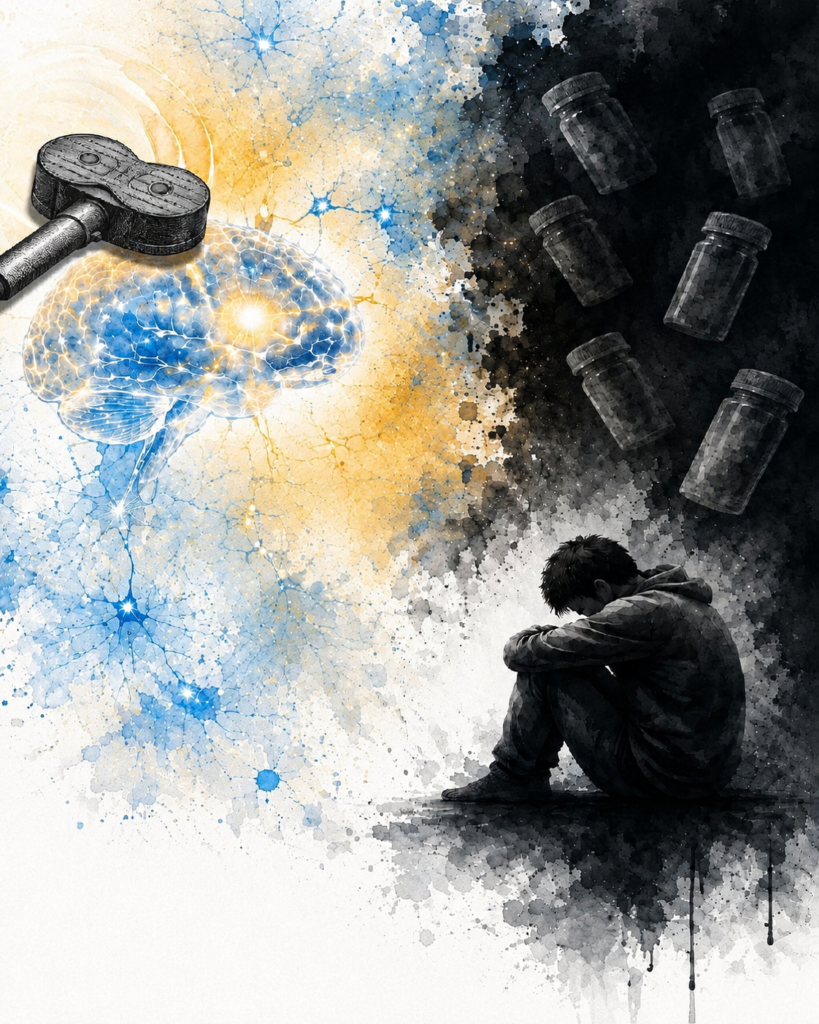
Unlike pharmacotherapy, which exerts systemic neurochemical effects, TMS directly modulates dysfunctional neural networks associated with depression. This circuit-based mechanism of action makes TMS particularly relevant for patients who have not achieved adequate response with medication.
For further information, please refer to our article:
“What Is Transcranial Magnetic Stimulation (TMS)?“
In standard treatment protocols, TMS sessions are administered regularly over several weeks. Multiple controlled studies have demonstrated that in patients with treatment-resistant depression, TMS can significantly reduce depressive symptoms, improve motivation, and enhance daily functioning.
For a detailed overview of the treatment process, see:
“TMS Treatment Process: From Initial Evaluation to Completion of Therapy Sessions.”
A Clinical Illustration
Consider a 38-year-old patient who has completed two adequate antidepressant trials over a six-month period yet continues to experience anhedonia, impaired concentration, and reduced occupational performance. After comprehensive reassessment, TMS therapy is initiated.
Following several weeks of treatment, the patient reports gradual improvements in motivation, cognitive clarity, and overall daily functioning.
This example illustrates how modifying the therapeutic approach may lead to clinically meaningful improvement in patients with treatment-resistant depression.
Final Perspective
Depression is a complex and heterogeneous disorder. Patients do not experience it in identical ways, and consequently, therapeutic responses vary.
Failure to respond to an initial treatment does not signify therapeutic failure. In many cases, reassessment and the integration of advanced modalities such as Transcranial Magnetic Stimulation (TMS) for depression can lead to substantial clinical improvement.
Treatment-resistant depression should therefore be viewed not as the end of therapeutic options, but as an indication to pursue more precise, individualized, and neurobiologically informed treatment strategies.
Advanced Technology in the Treatment of Treatment-Resistant Depression
In the field of technological psychiatry, selecting equipment that meets the highest standards of safety and clinical efficacy is of paramount importance.
Mavaranegar Company is the exclusive representative of MagVenture TMS systems in Iran and the Middle East.
MagVenture TMS devices hold official FDA 510(k) clearance for the treatment of Major Depressive Disorder (MDD) in patients who have not achieved satisfactory improvement with prior antidepressant medication, and are internationally recognized as among the most advanced and reliable neuromodulation technologies available.