
Can REM Sleep Aid Problem-Solving?
Have you ever woken up with a solution to a complex problem after a deep sleep? Recent research published in Neuroscience of Consciousness suggests that this phenomenon is more than just a coincidence; REM sleep (Rapid Eye Movement sleep) plays a significant role in problem-solving processes. In this article, we explore the intriguing findings of this study.
What Was the Main Idea of the Research?
In this study, researchers aimed to purposefully direct dream content towards unresolved problems; rather than merely observing what participants dreamed, they actively created conditions for specific problems to enter the dream space (Dream content stimulation).
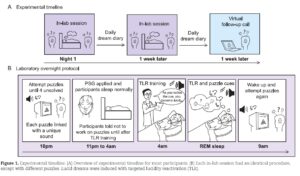
The goal was to determine whether deliberate direction of dream content could unlock the brain’s latent capacities for solving problems.
The Research Method: Stimulating the Brain During Sleep
Participants were initially presented with a series of creative and unresolved challenges. For each problem, a specific auditory cue was assigned. Subsequently, during REM sleep, these cues were played to nudge participants’ minds back towards the unresolved issues.
The Importance of Lucid Dreaming in the Results
A key aspect of this research was the focus on increasing the Lucid Dream Probability. When an individual is aware they are dreaming, their mental focus on the dream content is heightened. This technique allowed the problems not only to enter the dream but also to be processed differently in the mind.
What Did the Results Indicate?
The findings from this study have two significant implications:
1. Problems Became Integrated into Dream Content
Through the use of auditory cues, the frequency of participants reporting unresolved problems in their dreams significantly increased. This indicates that the brain is sensitive to environmental stimuli during sleep.
2. Increased Problem-Solving Rates the Following Day
The most striking outcome was that problems that appeared in dreams were more likely to be solved the next day. This suggests that the mind has a greater opportunity for creative processing when unresolved issues are present in the dream narrative.
What Do These Findings Mean?
This research offers compelling insights: REM sleep is not merely a time for rest; rather, it is a crucial phase during which the brain actively engages in processing information. When we purposefully guide dream content towards a specific goal, we are effectively activating our unconscious creativity.
Frequently Asked Questions (FAQ)
Can we really solve problems while we sleep?
Yes, this study demonstrates that by purposefully stimulating the mind during REM sleep, the likelihood of finding solutions to unresolved problems can be increased.
What is lucid dreaming and what role does it play?
Lucid dreaming refers to the state where an individual realizes they are dreaming. In this study, this state helped participants maintain greater focus on their problems during sleep.
Is this method applicable to everyone?
This research was conducted in a controlled laboratory setting. While techniques like jotting down problems before sleep can be beneficial, further studies are needed to fully understand practical applications.
Further Reading
For a comprehensive overview of this scientific achievement, we recommend reading the original article:
- Creative problem-solving after experimentally provoking dreams of unsolved puzzles during REM sleep
- Journal: Neuroscience of Consciousness (2026)
For updates on the latest scientific analyses and developments in neuroscience, stay connected with Mavaranegar.